
Clothing as Your Emotional Message: What You Wear Is Tied to How You Feel
Think about the last time you put on an outfit that just hit—the one that made you stand a little taller, move a little slower, take up a little more space.
That wasn’t an accident.
Clothing is more than fabric. It’s an emotional message—to the world, and to yourself. Every color, cut, and detail is a tiny sentence in the story you’re telling about who you are, what you’ve survived, and how you choose to show up.
For some of us, that message started as survival.
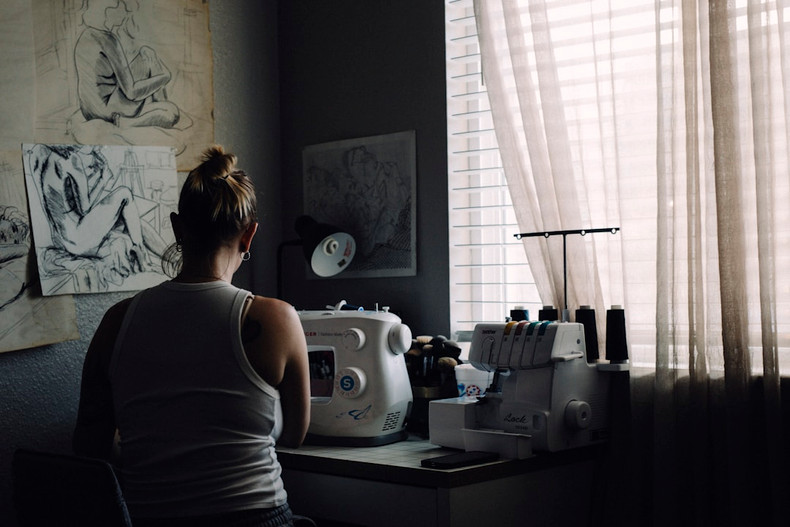
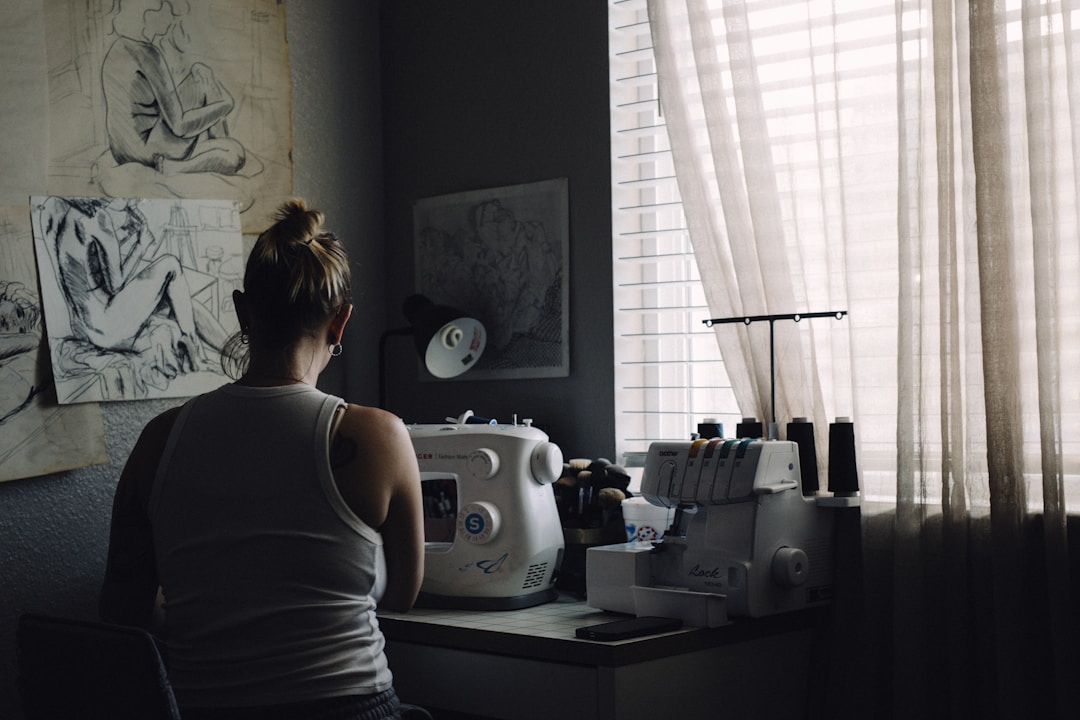
My mother was an avid sewer. She would sit in her armchair with a sewing machine balanced on a stool, creating unusual clothes that were way ahead of their time for me and my siblings. I would watch in awe.
Years later, tragedy struck in the form of fire. It was devastating, terrifying, and suddenly I felt like the whole world was staring at me. One of the things that helped me heal was sewing and creating. It gave me pride, confidence, and a way to stand out. Instead of being looked at for my wounds and scars, people could look at my clothes instead. It was kind of like a diversion.
That shift—from being looked at with pity to being seen with awe—became the seed of a brand built on resilience, bold self-expression, and the belief that God can pull beauty from fire.
This is what clothing as emotional message is all about.
Why Clothes Change How You Feel (The Psychology in Simple Terms)
We all know that an outfit can change our mood. Science backs that up.
Researchers call it fashion psychology—how what we wear influences how we think, feel, and behave. One powerful concept inside that field is “enclothed cognition.” It’s a fancy term for a simple idea:
What you wear doesn’t just change how others see you. It changes how you see you.
In a well-known study, psychologists Hajo Adam and Adam Galinsky gave people a white coat and asked them to perform attention-heavy tasks.
- When people wore the coat and were told it was a doctor’s coat, they did better on tasks requiring focus.
- When they were told the same coat was a painter’s coat, that performance boost disappeared.
- Just seeing the coat in the room (and not wearing it) did nothing.
Their conclusion: clothing transforms us when two things come together:
- The meaning we attach to it (powerful, creative, spiritual, playful, rebellious, etc.)
- The physical experience of wearing it on our bodies
So when you pull on a blazer that screams “CEO,” a dress that feels like vacation, a hoodie that feels like home, or a pair of sneakers that make you walk different—you’re not imagining the shift. Your brain is responding to the story those clothes carry.
Your clothes are your daily emotional script.
From Fire to Fashion: Turning Pain Into Power Through Clothing
Let’s go back to that living room armchair.
“My mom was an avid sewer. She would sit in her armchair with a sewing machine balanced on a stool, creating unusual clothes that were way ahead of their time for me and my siblings. I would watch in awe.”
Creativity was there from the beginning—fabric, thread, and a woman who didn’t wait for trends to tell her what was allowed.
Then everything changed.
“Tragedy struck in the form of fire. It was devastating, terrifying, and suddenly I felt like the whole world was staring at me.”
When your body carries visible scars, the world doesn’t always know how to look at you. Some people stare. Some look away. Both can feel like a wound.
So I did something brave.
“One of the things that helped me heal was sewing and creating. It gave me pride, confidence, and a way to stand out. Instead of being looked at for my wounds and scars, people could look at my clothes instead. It was kind of like a diversion.”
Clothing became more than style. It became:
- A shield from pity
- A spotlight on creativity instead of pain
- A new story: not just “girl who survived,” but “woman who creates”
I started small:
- Making clothes for family and friends
- Selling from the trunk of my car to the street guys in my neighborhood
Then I took it further.
“From there I went to the London College of Fashion, from flea markets to stores in Camden Town, and Melrose Avenue. Today my store is online, allowing me to reach the world while teaching sewing to the next generation. I’m showing people that even through tragedy, hardship, and obstacles, there is still a good life to be had. God is good.”
My entire journey is clothing as emotional message in real time.
Every piece I create carries that DNA: resilience, individuality, bold self-expression, turning pain into power, creativity—and faith that there’s still goodness ahead.
When you shop from a brand like this, you’re not just buying a dress or a hoodie. You’re wearing someone’s testimony. Yours too.
Clothing as a Diversion, Armor, and Love Letter to Yourself
Girls if you’ve ever:
- Worn a bright red lipstick on a day you felt invisible,
- Put on oversized sunglasses after a night of crying,
- Reached for your softest sweater when the world felt harsh,
Guys have you ever:
- Thrown on that one perfectly broken‑in hoodie when you were low and didn’t want questions,
- Chosen your freshest sneakers and a crisp tee on a day you needed respect you weren’t feeling yet,
- Pulled on a heavyweight jacket or boots that make you feel solid when life feels shaky,
…you’ve already used clothing as emotional protection.
Clothes can be:
- Diversion – “Don’t look at my pain, look at my art.”
- Armor – Structured shoulders, bold colors, clean lines, or serious footwear that say, “I’m still here.”
- Soft place to land – Flowy dresses, roomy sweatpants, soft knits, and lived‑in tees that say, “You’re allowed to rest.”
- Declaration – A graphic tee, a statement jacket, or a pair of wild sneakers that say what your voice is too tired to explain.
After the fire, when I stepped out into the world, people saw the damage first. When I started showing up in pieces I’d created myself, people saw the outfit first.
Same person. Different emotional message.
That’s the power hanging in your closet right now—whether you’re reaching for a dress, a tracksuit, a blazer, or a pair of Jordans.
When Patterns Speak: Birds, Hearts, Stripes, and Every Graphic in Between
It’s not just color that talks.
Patterns and graphics are full sentences all by themselves. Some whisper. Some shout. Something in the pattern resonates with you, you may not know why.
Think about what’s actually on the fabric:
- Tiny birds in flight
- Black hearts scattered across a sleeve
- Sharp stripes running down a leg
- Bold graphics or words across a chest
Each of these carries a mood, a story, and a subtle (or not-so-subtle) message.
Birds in flight: freedom, escape, and rising above
Bird prints often feel like movement. They can suggest:
- “I’m not stuck where I started.”
- “I’m rising above what happened to me.”
- “I’m allowed to dream and go.”
For someone who’s lived through fire, loss, or trauma, a pattern of birds might not just be “cute.” It can be a quiet declaration of survival and freedom.
Hearts (even black ones): love, rebellion, and complicated feelings
Hearts are usually read as love, romance, softness.
But black hearts twist that symbol a little:
- They can say, “I’ve been hurt, but my heart is still here.”
- Or, “I don’t do fluffy, but I still feel deeply.”
- They mix sweetness with edge—tenderness with armor.
Patterns like this are perfect for people who don’t want to present as either “hard” or “soft,” but something real and layered in between.
Stripes: direction, order, and rhythm
Stripes seem simple, but they’re powerful:
- Vertical stripes can read as forward motion, growth, lengthening
- Horizontal stripes can feel stable, grounded, rooted
- Sharp, high-contrast stripes can say, “I’m bold, I’m exact, I’m here.”
- Soft, irregular stripes feel more relaxed, like a heartbeat or a wave
When you choose stripes, you’re often choosing a kind of inner rhythm for the day—clean and focused, or easy and flowing.
Graphics and words: when your clothes literally speak
Graphic prints and text are the loudest emotional messengers:
- A big, abstract graphic can say, “I’m art before I’m explanation.”
- A photo print can carry memory, mood, nostalgia.
- Words across a tee or hoodie—whether it’s scripture, a phrase, or one loaded word—cut straight through the guessing game.
That’s why some of my pieces don’t just use color or cut—they carry a full testimony across the front, like my “Deliver Me From Evil” hoodie and my “Weeping May Endure for a Night, but Joy Comes in the Morning” hoodie.
These are the pieces that can:
- Announce your values without a speech
- Signal your faith right in the middle of your pain
- Give you courage when you catch your own reflection and read the promise you’re wearing
Sometimes, before you even open your mouth, your hoodie has already told the room what you believe you can come back from.
Loud vs. quiet patterns: volume control for your feelings
Some days you want your patterns to shout for you:
- Big graphics
- High-contrast prints
- Oversized motifs (huge florals, giant animals, bold symbols)
Those are “see me, hear me, I’m not hiding” days.
Other days, you want your patterns to whisper:
- Micro-prints you only notice up close
- Tone-on-tone designs
- Details hidden in linings, cuffs, or seams
Those are “I still have something to say, but only the right people will notice” days.
Both are valid. Both are emotional choices.
When you start paying attention to the prints you’re drawn to, you’ll notice patterns in your patterns:
- Maybe you always reach for birds, stars, or sky imagery when you’re pushing through hard seasons
- Maybe stripes show up when you’re trying to get your life back in order
- Maybe hearts and florals sneak in when you’re finally letting yourself soften again
The key is this:
Nothing on your clothing is neutral.
Everything is saying something—either by default or by design.
You get to decide:
Will your patterns just follow trends, or will they help tell your story?
How to Dress for the Mood You’re In (Without Gaslighting Yourself)
You don’t have to fake happiness with your clothes. In fact, trying to dress like a sunshine Barbie when you’re grieving can feel like emotional whiplash.
Instead, think in terms of honoring your current mood—while gently supporting yourself through it.
- Name what you’re actually feeling
Before you grab anything, pause for 10 seconds and finish this sentence:
“Today, I feel…”
(Tired? Tender? Fired up? Anxious? Powerful? Raw?)
No judgment. Just data.
- Match the intensity, not the problem
If you’re feeling heavy, you don’t have to wear all black (unless that feels right). But you might:
- Choose deeper tones over neon
- Pick fabrics that feel comforting, like cotton, knits, or jersey
- Go for silhouettes that don’t pinch or fight your body
If you’re buzzing with energy:
- Try colors that carry that same spark—red, coral, electric blue, saturated prints
- Play with sharper lines, bolder cuts, pieces that make you feel “on”
- Use texture as self-care
We talk a lot about color, but texture is deeply emotional:
- Soft knits and brushed fabrics can soothe anxiety
- Denim, leather, and structured wovens can make you feel grounded and strong
- Silk and satin can remind you you’re allowed to be sensual and soft, even on hard days
Ask yourself: What do I want to feel on my skin today—held, powerful, loose, or unbothered?
- Let one piece tell the truth
If you’re not ready to dress your whole body in your mood, start small:
- A ring you twist when you’re nervous
- A pair of boots you wear when you need courage
- A sweatshirt or hoodie from a time you felt safe
Everything else can be neutral. Let that one piece carry the emotional weight.
How to Dress for the Mood You Want to Create
Sometimes you wake up and think, “I don’t want to stay here. I want to feel different.”
This is where enclothed cognition becomes your secret weapon. You use clothing to step into the version of you you’re becoming.
- Choose your role for the day
Ask: “Who do I need to be today?”
- Boss in charge?
- Soft, present mom or friend?
- Artist in flow?
- Man or woman of faith who’s choosing hope, even scared?
Then dress for that role.
For the Powerful You:
- Structured blazer or jacket
- Defined shoulders or clean lines
- Darker base colors with one bold accent
For the Soft, Grounded You:
- Flowy dress or wide-leg pants, or relaxed-fit pants and a soft hoodie
- Earth tones, creams, muted blues or greens
- Minimal hardware, nothing digging into your skin
For the Creative You:
- Unexpected color combos
- Asymmetry, unusual prints, or upcycled pieces
- Accessories that feel like art, not decoration
- Borrow meaning from your clothes
Remember the lab coat study? The coat only worked like a “focus booster” when people believed it was a doctor’s coat—not just a random jacket.
You can do the same thing with your clothes. Decide what your clothes mean.
- Those boots? Maybe they’re your “I walk through fire and keep going” boots.
- That dress? Your “I still believe in beauty” dress.
- That hoodie? Your “God’s not done with me yet” uniform.
Say it to yourself when you put it on. Yes, out loud. You’re writing the emotional meaning into your wardrobe.
- Use color like a dial
Color psychology isn’t an exact science, but some patterns tend to hold. The magic happens when you learn those patterns—and then layer your own meaning on top.
- Red: energy, visibility, passion
- Yellow: optimism, playfulness (in softer shades, warmth and approachability)
- Blue: calm, trust, clarity
- Green: growth, balance, freshness
- Black: strength, seriousness, mystery
- White/cream: simplicity, newness, spiritual clean slate
These are shared patterns. On top of that, you add your personal patterns:
- Maybe red is your “I was scared and did it anyway” color.
- Maybe blue is your “God carried me through that season” color.
- Maybe black is your “no nonsense, no more settling” color.
When you get dressed with both in mind, your outfit becomes a double message:
- To the world: “Here’s how I’m showing up.”
- To yourself: “Here’s the feeling I’m calling in.”
You don’t have to drown yourself in a single color. Even a stripe, scarf, or lining can shift your emotional message.
Ask: What’s one color I can add today that moves me closer to how I want to feel?
Building an “Emotional Wardrobe” That Tells Your Story
Instead of chasing random trends, think of your closet as a small, curated museum of your life.
Every piece either:
- Reminds you who you are,
- Honors what you’ve survived, or
- Points toward who you’re becoming.
Here’s how to start building that kind of wardrobe.
- Audit your closet by emotion, not just by style
Pull out 10–15 things you actually wear. For each item, ask:
- “How do I feel when I wear this?”
- “What story does this tell about me?”
Sort them into loose emotional categories:
- Armor pieces – I feel strong, untouchable, bold
- Soft landing pieces – I feel safe, relaxed, held
- Spotlight pieces – I feel seen, unforgettable, expressive
- Faith pieces – I feel connected, hopeful, carried
Anything that consistently makes you feel small, ashamed, or not-you? That’s a candidate to let go.
- Identify your emotional gaps
Once you’ve sorted, look for what’s missing.
- Do you have lots of armor but nothing that feels like rest?
- Plenty of comfy pieces but nothing that makes you feel powerful?
- Tons of “I used to be that person” clothes but not much that fits who you are now?
Those gaps are your shopping list—and your design brief.
- Choose story pieces with intention
When you do buy something new (or design it yourself), ask:
- “What chapter of my story does this belong to?”
- “What emotional message will I be sending—to myself and to the world—when I wear this?”
If the answer is just, “It was on sale,” maybe hold off. You deserve clothes that say more than that.
Look for pieces that:
- Have details that feel like you (stitching, patterns, quotes, shape)
- Are made by people whose stories inspire you (like a founder who turned fire into fashion)
- You can imagine wearing in actual, real-life moments—not just some fantasy life three sizes and ten years away
- Make space for resilience and faith in your closet
If resilience and faith are part of your life, let them live in your wardrobe too.
That might look like:
- A jacket that reminds you of a season you didn’t think you’d survive—but did
- Pieces designed by founders who talk openly about God and goodness in hard times
- Subtle details—lining prints, embroidery, messages on tags—that whisper truth to you when no one else can see them
Your emotional wardrobe is not supposed to be perfect. It’s supposed to be honest.
Creating, Not Just Consuming: Why Sewing and Making Are So Healing
There’s a reason I didn’t stop at wearing clothes. I had to make them.
In the aftermath of the fire, sewing wasn’t just a hobby. It was a reclaiming.
- Every seam said, “My hands still work.”
- Every finished piece said, “I can build something beautiful out of damage.”
- Every compliment shifted the conversation from, “What happened to you?” to, “Where did you get that?”
Today, my online store is more than a place to click “add to cart.” It’s an invitation:
- To wear pieces born from a story of survival and faith
- To feel that same resilience every time the fabric touches your skin
- To support a woman who went from trunk sales and flea markets to Camden Town and Melrose Avenue, and now to your screen
And I don’t just sell; I teach.
I’m passing sewing down to the next generation—showing young people that:
- Their pain can become power
- Their ideas deserve to exist in fabric, not just in their heads
- Even when life burns everything down, there’s still a good life to be had
That’s the core belief stitched into every hem: God is good, even here.
Whether you ever touch a sewing machine or not, you’re allowed to be a creator of your own emotional wardrobe—not just a consumer.
Bringing It All Together: Let Your Clothes Speak for You (On Purpose)
Your closet is already saying something. The question is: Is it telling the truth about you—and the life you’re building—or just repeating old stories you’ve outgrown?
You don’t need a whole new wardrobe to start changing the message. You can begin today by:
- Noticing how different clothes make you feel.
- Honoring your current mood instead of fighting it.
- Choosing one item that supports the mood you want to step into.
- Letting meaning matter—deciding what certain pieces represent for you.
- Slowly curating an emotional wardrobe filled with armor, softness, spotlight, and faith.
And when you reach for pieces designed by a woman who’s walked through fire—literally—and still chose beauty, color, and boldness, you’re not just getting dressed.
You’re agreeing with a deeper truth:
I am more than what happened to me. I am art, I am story, and I am still becoming.
So tomorrow morning, when you stand in front of your closet, don’t just ask, “What matches?”
Ask, “What do I want my clothes to say for me today?”
Then let them speak.
Research Sources: